Pilgrimage of Mercy
We have few openings available
Next meeting: St. Mark’s Catholic Church. Sunday, January 10th, 2027 at 1 PM.
2960 W. Northview St., Boise, ID., Meeting in the Faith Formation room by the big parking entrance (North side).

Pilgrimage to Poland and Medugorje June 14-29, 2026
Scheduling and Locations are subject to change.
__________________________________________________________________
June 14 (Mon) Fly to Warsaw, Poland.
__________________________________________________________________
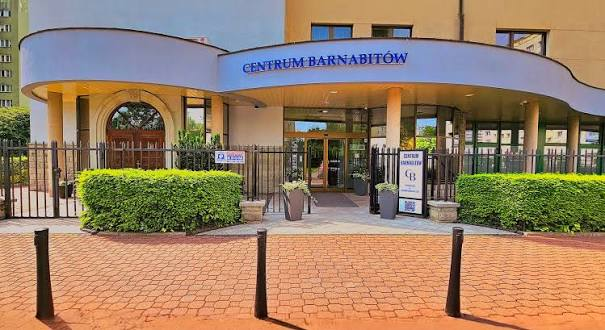
June 15 (Tue) Arrive Warsaw. Bus to Hotel Centrum Barnabitow.
__________________________________________________________________
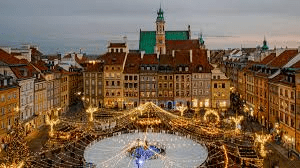
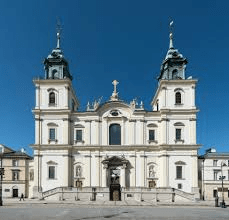
June 16 Warsaw guided walking tour. Holy Cross Basilica, Old Town, Cathedral of St. John & Sanctuary of Graceful Mary.
Old Town Warsaw
Warsaw’s Old Town, historically known as Old Warsaw, lies in the city’s central Śródmieście district. As the oldest part of Warsaw, it is home to many treasured landmarks, including the Royal Castle, the city walls, St. John’s Cathedral, the Barbican, the Old Town Market Square, and the Warsaw Mermaid Statue. The settlement dates to the 13th or 14th century and received town privileges around 1300.
The Old Town was almost completely destroyed during World War II and was carefully rebuilt afterward. This remarkable project was the world’s first effort to restore an entire historic city center. UNESCO added the area to the World Heritage List in 1980, and in 2011 the Archive of the Warsaw Reconstruction Office joined UNESCO’s Memory of the World Register.
Cathedral Basilica of St. John
The Archcathedral of St. John the Baptist is one of Warsaw’s oldest churches and one of the Old Town’s most important landmarks. Originally built in the late 14th century in the Gothic style, it has been remodeled and rebuilt many times. Polish kings and queens were crowned here, and many notable Poles are buried within its walls, giving the cathedral a special place in the nation’s history.
After the cathedral was almost completely destroyed in World War II, it was rebuilt in its earlier 14th-century Gothic form rather than the Baroque style it had before the war. Many works of art survived and can still be seen inside. The simple brick façade is easy to recognize, while the interior has three naves and several chapels along the left aisle.
Beneath the main aisle are crypts holding the tombs of several important figures. They include Poland’s last king, Stanisław August Poniatowski; pianist, composer, and Polish president Jan Ignacy Paderewski; and Primate Stefan Wyszyński, an early leader in the Polish Catholic Church’s struggle for recognition under communist rule.
Sanctuary of Our Lady of Grace
The Jesuit Church, also known as the Church of the Gracious Mother of God, stands beside St. John’s Cathedral. With its richly decorated interior and distinctive design, it is one of Warsaw’s most notable churches.
King Sigismund III Vasa and court official Andrzej Bobola the Elder founded the church for the Jesuits in 1609, following an initiative by Piotr Skarga. Jan Frankiewicz designed the main building, which was constructed between 1609 and 1626 in the Polish Mannerist style.
__________________________________________________________________
June 17 (Thur) Drive and Visit to Sanctuary of Divine Providence and Wilanow Royal Park. Drive to Niepokalanow: St. Maximilian Kolbe.
Sanctuary of Divine Providence
The Temple of Divine Providence (Polish: Świątynia Opatrzności Bożej) is a major Roman Catholic church in Warsaw’s Wilanów district. First envisioned in the 18th century, it serves as both a national and religious symbol. The complex includes the church, the Museum of John Paul II and Primate Wyszyński, and the Pantheon of Great Poles.
The Center of Divine Providence reflects Poland’s Catholic heritage and honors key moments in its modern history, including the Constitution of May 3, 1791; independence in 1918 and 1989; the 1920 “Miracle at the Vistula”; the rise of Solidarity in 1980; and the ministries of Stefan Wyszyński and Pope John Paul II. The church also marks 1,000 years of Christianity in Poland.
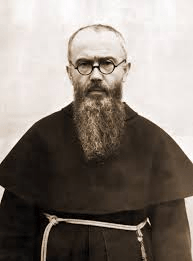
Saint Maximilian Kolbe
Saint Maximilian Kolbe was a Polish Conventual Franciscan friar. During the German occupation, he stayed at Niepokalanów, where the monastery published anti-Nazi writings. Arrested in 1941 and sent to Auschwitz, he continued caring for others as a priest. When ten prisoners were chosen to die by starvation, Kolbe freely took the place of a stranger. He was later canonized as a martyr.
Early Life
In 1910, he received the religious name Maximilian and entered the order, taking final vows in 1914. He later studied in Rome, earning doctorates in philosophy in 1915 and theology in 1919. Ordained a priest, Kolbe returned to independent Poland in 1919 and settled at Niepokalanów near Warsaw. Tuberculosis affected his health for the rest of his life, yet he met it with patience and faith. Fr. Kolbe devoted his ministry to sharing the Catholic faith. Deeply devoted to the Virgin Mary, he became active in the Militia Immaculata, also known as the Army of Mary. Kolbe wrote that he felt increasingly drawn to the Immaculata and prayed to her with deep devotion. Fr. Kolbe helped renew and organize the Militia Immaculata. The friars published pamphlets, books, a daily newspaper, and a monthly magazine that reached more than one million readers. He also used radio to share his message, embracing new technology with energy and purpose. Alongside his essays and newspaper work, Fr. Kolbe composed the Immaculata Prayer, a prayer of consecration to the Virgin Mary. In 1930, Fr. Kolbe traveled to Japan as a missionary and founded a monastery near Nagasaki. Sheltered by a mountain, it later survived the atomic bombing. He built friendships with local Buddhist priests before poor health brought him back to Poland in 1936.
Second World War
At the start of the war, Fr. Kolbe lived at Niepokalanów, the “City of the Immaculata.” By then, it had grown from 18 to 650 friars, becoming Europe’s largest Catholic religious house. After Nazi Germany invaded Poland in 1939, Kolbe was arrested on September 13 and released three months later. After his release, Fr. Kolbe and the Niepokalanów community sheltered, fed, and clothed about 3,000 Polish refugees, including roughly 1,500 Jews. In 1941, his newspaper, The Knight of the Immaculate, openly criticized the Nazis. Kolbe taught that truth must be sought and served. He believed the deepest struggle lies within each person—the choice between good and evil, sin and love—and that outward victories mean little without inner integrity.
__________________________________________________________________
June 18 (Fri) Drive to Jasna Gora with Mass. Leave to go to Krakow.
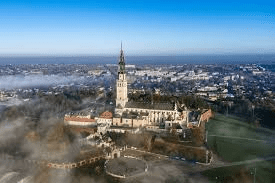
Jasna Góra Monastery
Jasna Góra Monastery in Częstochowa, Poland, is a shrine dedicated to the Virgin Mary and an important place of pilgrimage. One of its most treasured objects is the image of the Black Madonna of Częstochowa, also called Our Lady of Częstochowa.
__________________________________________________________________
June 19 (Sat) 5 hrs walking Tour of Old town Krakow, with many churches and saints, graves and relics, including St Mary Basilica (Mass at St Mary Baslilica) and Sites connected to St. John Paul II.
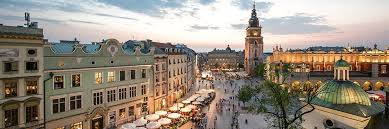
Kraków
Kraków, officially called the Royal Capital City of Kraków, is Poland’s second-largest city and one of its oldest. It stands on the Vistula River in the Lesser Poland Voivodeship. Kraków was Poland’s capital until 1596 and has long been an important center of economic, academic, cultural, and artistic life. In 1978, its Old Town became one of the first places named a UNESCO World Heritage Site.
Old Town
Old Town is the oldest historic part of Kraków and lies within Planty Park. It is one of Poland’s best-known historic areas. From 1038 until King Sigismund III Vasa moved his court to Warsaw in 1596, it was at the heart of Poland’s political life.
The medieval Old Town was among the first places added to UNESCO’s original World Heritage List as part of the Historic Centre of Kraków. In Polish, it is called Stare Miasto. It belongs to the city’s first administrative district, which has the same name but covers a larger area.
Medieval Kraków was surrounded by a 3 km (1.9 mi) defensive wall with 46 towers and seven main gates. The plan of Stare Miasto, a 13th-century merchants’ town, was laid out in 1257. At its center is the Main Market Square. Nearby landmarks include St. Mary’s Basilica, the Church of St. Wojciech (St. Adalbert’s), the Church of St. Barbara, and other national treasures. In the center of the square, among tenement houses and noble homes, stands the Renaissance Cloth Hall, Sukiennice. It now has gift shops, restaurants, and market stalls, with the National Gallery of Art upstairs. The Town Hall Tower (Wieża ratuszowa) stands beside it.
The Royal Road runs through the district. Polish kings once followed this route for their coronations.
The Church of the Assumption of the Blessed Virgin Mary
The Church of the Assumption of the Blessed Virgin Mary is a historic Roman Catholic parish church. It stands in Mariacki Square, at the northeast corner of the Main Market Square in Kraków’s Old Town.
It is a Brick Gothic church built in the 14th century, with foundations dating to the early 13th century. It is considered a fine example of Polish Gothic architecture.
Every hour, day and night, the Hejnał mariacki trumpet call is played from the taller of St. Mary’s two towers.
St. Mary’s Basilica also inspired the design of several Polish churches, including St. Michael’s and St. John Cantius in Chicago. Both were built in the Polish Cathedral style.
__________________________________________________________________
June 20 (Sun) Driving tour to Wadowice where John Paul II was born, His home museum, church of baptism and main square. Then to Kalwaria Monastery, a Unesco site important for St. John Paul II.
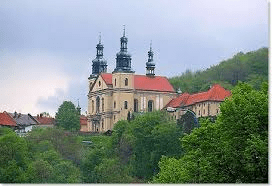
Wadowice is a town in the Lesser Poland Voivodeship in southern Poland, about 50 kilometres (31 miles) southwest of Kraków. It is best known as the birthplace of Karol Wojtyła, who became St. Pope John Paul II.
__________________________________________________________________
June 21 (Mon) Divine Mercy Sanctuary. Aushwitz in the afternoon.
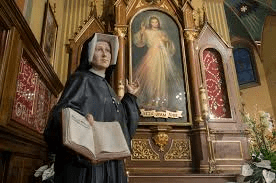
The Divine Mercy Sanctuary
The Divine Mercy Sanctuary (Polish: Sanktuarium Bożego Miłosierdzia) in Kraków is a Roman Catholic basilica devoted to the Divine Mercy. It is also the resting place of Saint Faustina Kowalska.
Maria Faustyna Kowalska of the Blessed Sacrament, OLM, was born Helena Kowalska on 25 August 1905 and died on 5 October 1938. She was a Polish Catholic sister and mystic. Known as Faustina in English, she said she experienced appearances of Jesus Christ. These experiences inspired the Catholic devotion to the Divine Mercy.
Kowalska said that she saw Jesus and spoke with him. She recorded these experiences in her diary, later published as The Diary of Saint Maria Faustina Kowalska: Divine Mercy in My Soul. Her biography, submitted to the Congregation for the Causes of Saints, included some of the conversations about the Divine Mercy devotion.
At age 20, she joined a convent in Warsaw. She later moved to Płock and then to Vilnius. There she met Father Michał Sopoćko, who became her confessor and spiritual director and supported her devotion to the Divine Mercy. With his help, Kowalska asked an artist to paint the first Divine Mercy image based on her vision of Jesus. Father Sopoćko celebrated Mass with the painting present on Low Sunday, also called the Second Sunday of Easter and, as later established by Pope John Paul II, Divine Mercy Sunday.
The Catholic Church declared Kowalska a saint on 30 April 2000. In the liturgy, she is honored as a virgin and is known as the “Apostle of Divine Mercy.” Her tomb is in the Divine Mercy Sanctuary in Kraków, where she spent the final part of her life.
Auschwitz
Auschwitz was a group of concentration and extermination camps run by Nazi Germany in occupied Poland during World War II and the Holocaust.
__________________________________________________________________
June 22 (Tues) Bus Drive to Budapest and 3 hrs afternoon Tour of Budapest old town and royal hill including St. Stephen Basilica. Mass at St. Stephen Basilica. Overnight in Budapest.
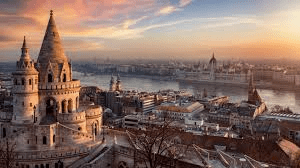
Old town Budapest
The Castle Quarter is the oldest part of Budapest, Hungary. It lies on Castle Hill in Buda, inside the defensive walls of the Buda Castle complex. This area matches the medieval royal city of Buda and has been continuously inhabited since 1247.
St. Stephen’s Basilica
St. Stephen’s Basilica is a Roman Catholic basilica in Budapest, Hungary. It is named for Stephen, the first King of Hungary (c. 975–1038), whose right hand is kept in a reliquary there. Today, it is the third-largest church building in Hungary and the largest church in Budapest. It is also an important historic landmark within the buffer zone of the city’s UNESCO World Heritage Site.
__________________________________________________________________
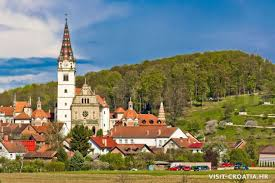
June 23 (Wed) 0700 Drive to Marija Bistrica, Croatia for the Holy Mass and Overnight stay.
__________________________________________________________________
June 24 (Thurs) Orientation Of Medjugorje, daily program to be announced.
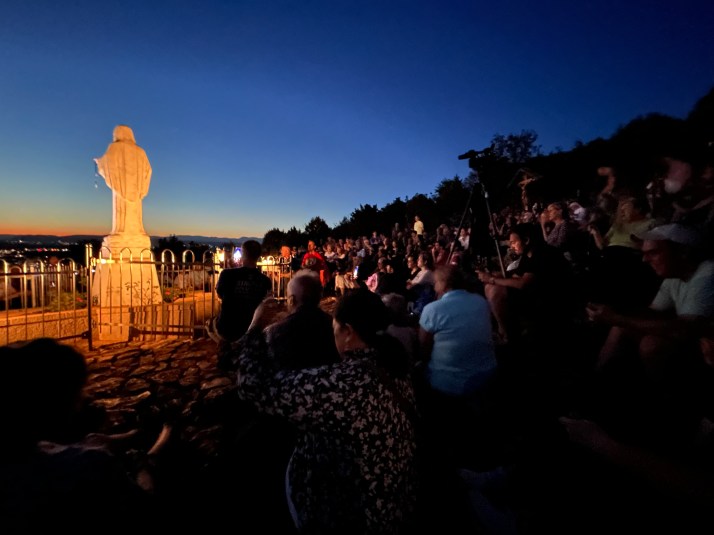
June 25 (Fri) Apparition Hill, daily program to be announced.
June 26 (Sat) Cross Mountain, daily program to be announced.
June 27 (Sun) Mass at noon Lunch at 130-230, daily program to be announced.
June 28 (Mon) Mother’s Village in the morning, Mass, Lunch then bus to Kastela, Coratia for overnight.
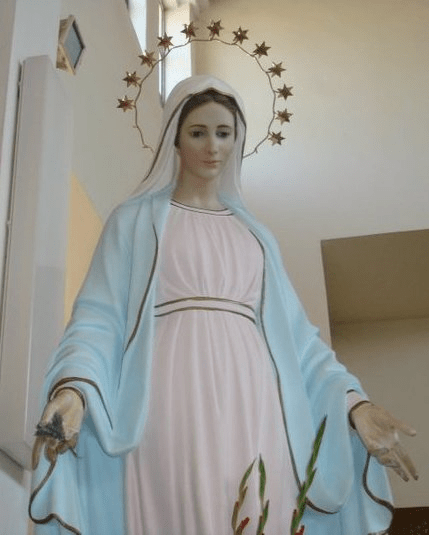
Medjugorje – A Mission for Peace
In June 1981, the Blessed Virgin Mary appeared to six children in a small mountain village in Bosnia-Hercegovina named Medjugorje. Identified as the Queen of Peace, she came on a mission of Peace with a message for the world. “I have come to tell the world that God exists. He is the fullness of life, and to enjoy this fullness and peace, you must return to God”. Since then, Our Lady has been appearing and giving messages to the world through these six visionaries, Marija, Vicka, Ivan, Mirjana, Jakov, and Ivanka. She has told them that God has sent Her to our world and that these years She is spending with us, are a time of Grace granted by God. She has come to guide us to Her Son, Jesus, and invites us to convert our lives back to God and to urgently pray for Peace with all our hearts. “Peace, peace, peace, and only peace. Peace must reign between man and God, and between all people!” She leads us by walking with us and guiding us step by step, message by message.

5 Stones or Weapons
Our Lady wants to show us through Her messages the real face of Christianity and the path to peace. She says that we must realize that Satan is real and that he uses us for his own ends and purposes. His main purpose is destruction. Destruction of love, peace, faith, family, and life. Just as God gave David 5 stones with which to defeat Goliath, Our Lady is also giving us 5 Stones, or Weapons, that we can use to defeat satan.
1. Daily Prayer (Of the Rosary)
2. Fasting on Wednesdays and Fridays
3. Holy Mass (Eucharist)
4. Daily Reading of the Bible
5. Monthly Confession
__________________________________________________________________
June 29 Fly to USA

__________________________________________________________________

