Meeting Date: St. Mark’s Catholic Church. Sunday, May 17, 2026 at 1 PM.
Meeting Date: St. Mark’s Catholic Church. Sunday, August 16, 2026 at 1 PM.
Address: 7960 W. Northview St., Boise, ID., Meeting in the Resurrection room across from office.
Journey to Italy and Medjugorje
September 4-19, 2026
Travel Itinerary
Sept 4 Fly to Rome
Sept 5 Subiaco
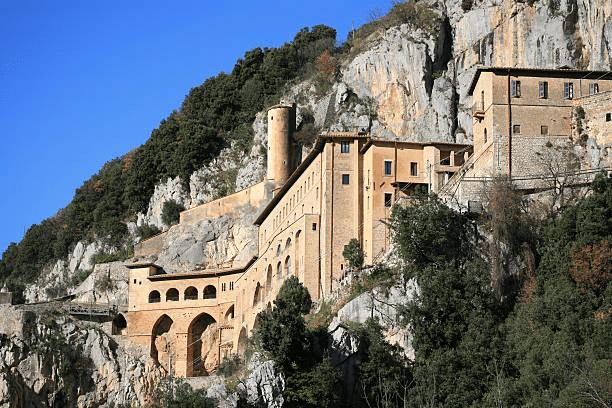
Nestled among the majestic cliffs of the Simbruini mountains in Subiaco, a town about an hour from Rome in the heart of the Aniene River valley, stands the Monastery of St. Benedict, also known as the “Sacro Speco” (“Sacred Cave”). It is from this place that the famous rule of religious life was born and would spread through the centuries, still followed by thousands of monks and nuns around the world today.
Subiaco’s Sacred Cave — the “speco” — where St. Benedict found shelter and lived as a hermit for about three years. It eventually became a pilgrimage site and source of spiritual inspiration, and over the centuries, a magnificent monastic complex was built around it. Credit: D. Ermacora
In the sixth century, the young Benedict of Nursia withdrew into solitude, fleeing a corrupt and noisy world in search of an inner state that would bring him closer to God through reflection and the listening of silence. Among the rocks and trees, he found a cave — the “speco” — which sheltered him in hermitage for about three years. Thanks to the charity of a local monk and nearby shepherds, to whom he offered knowledge in exchange for food, he survived hunger and hardship.
From that cave began a spiritual journey of prayer and asceticism that led St. Benedict to formulate the rule that countless religious follow today. He devoted great attention to contemplation and prayer, considering silence an essential condition for receiving the word of God and the inspiration for a life of prayer, work, and brotherhood — according to the motto “Ora et Labora” (“Pray and Work”).
Sept 6-8 Assisi
Assisi, a picturesque hillside town in Italy, it is renowned for its profound spiritual significance and rich historical heritage. It is the birthplace of St. Francis of Assisi, the founder of the Franciscan Order, and boasts several sacred sites that attract pilgrims and visitors from around the world.
Basilica of St. Francis

The Basilica of St. Francis is perhaps the most significant site in Assisi, dedicated to its patron saint. This magnificent structure consists of an upper and lower basilica, adorned with stunning frescoes by renowned artists such as Giotto and Cimabue. The upper basilica features a vibrant and colorful depiction of the life of St. Francis, illustrating his deep connection to nature and his teachings on humility and peace. The lower basilica houses the tomb of St. Francis.
Basilica of St. Clare
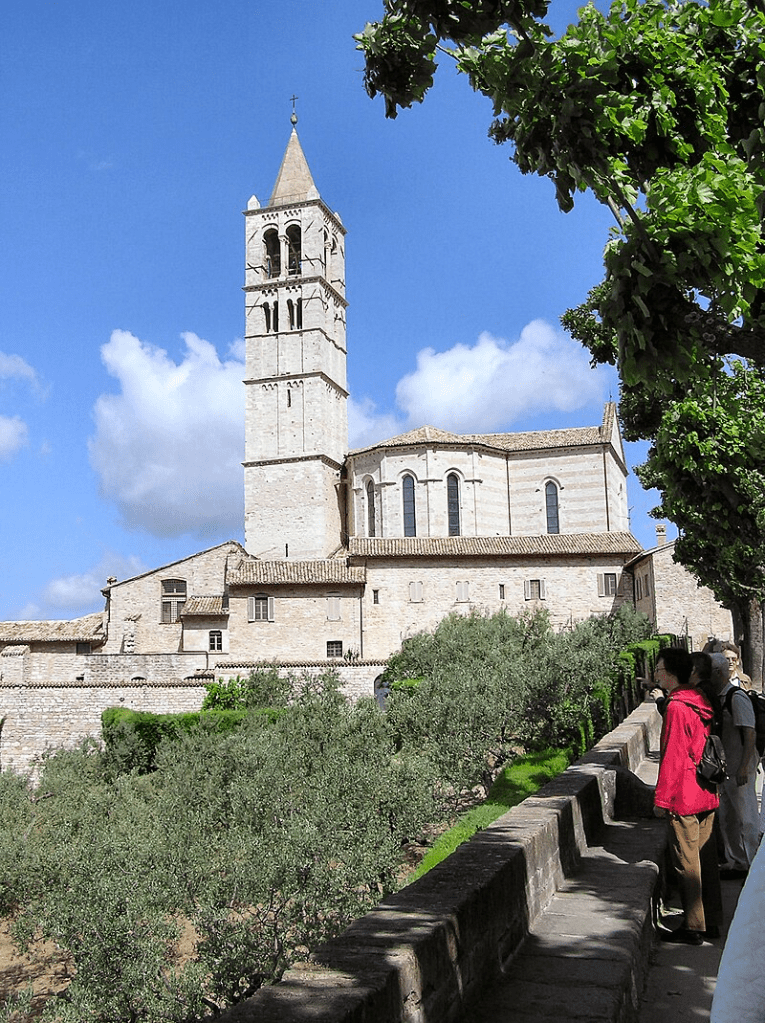
The Basilica of St. Clare is another important site dedicated to one of St. Francis’ closest followers, St. Clare of Assisi. This church boasts a beautiful façade and houses her relics and the original San Damiano Cross, which is closely tied to her and St. Francis’ life. Visitors can also admire the stunning artworks and serene atmosphere that encourage prayer and contemplation.
Eremo delle Carceri
The Eremo delle Carceri is a serene hermitage located on the slopes of Mount Subasio, just outside of Assisi. It was here that St. Francis and his followers retreated for prayer and reflection.
Church of Santa Maria sopra Minerva
The Church of Santa Maria sopra Minerva is an impressive Gothic church built atop a Roman temple. It is known for its beautiful interior, featuring stunning altars and artworks. The church is also the site of the tomb of Blessed Angela of Foligno, a prominent mystic and saint. The blend of ancient and medieval architecture in this church creates a unique spiritual atmosphere.
Piazza del Comune
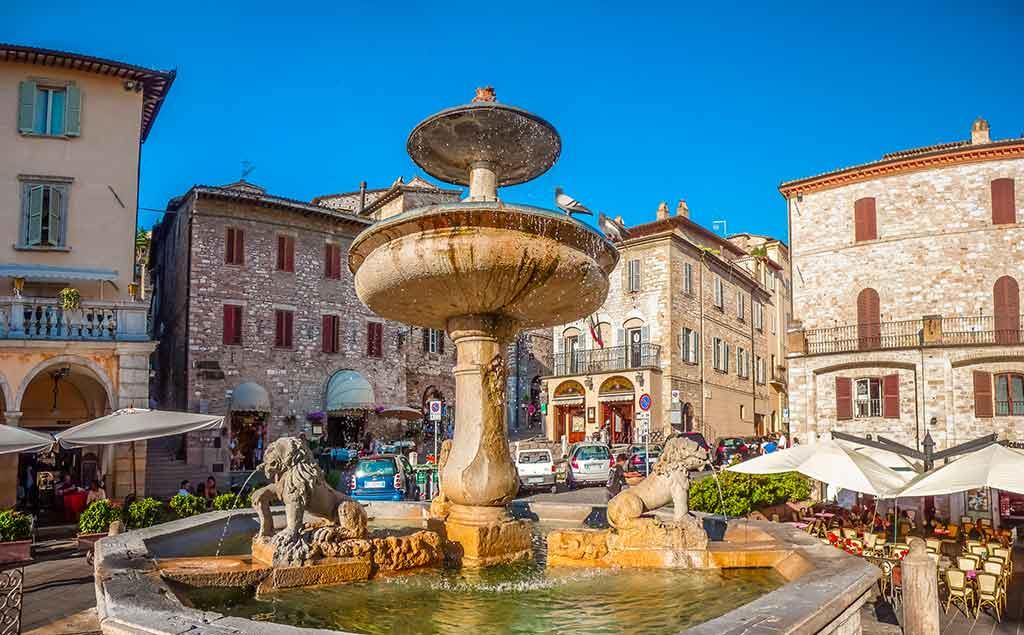
The Piazza del Comune serves as the heart of Assisi, surrounded by historical buildings, shops, and cafes. It is an ideal spot to relax and soak in the vibrant atmosphere of the town. The square is home to the Temple of Minerva, a well-preserved Roman temple that showcases the town’s ancient history.
Basilica of Santa Maria degli Angeli
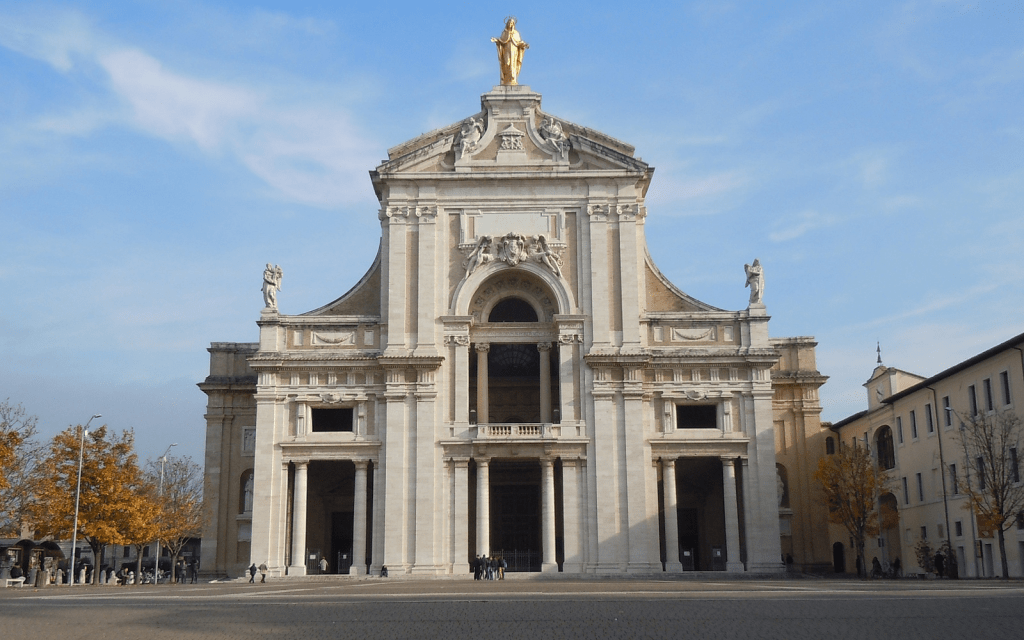
The Basilica of Santa Maria degli Angeli is a remarkable church located just outside the town of Assisi, Italy. This basilica is built within a former Franciscan convent and holds great significance as a pilgrimage site due to its connection to St. Francis of Assisi.
Originally constructed in the 16th century, the basilica was built to commemorate the spot where St. Francis received divine inspiration. The site features the Portiuncula, a small chapel that St. Francis fiercely loved and is considered the heart of the Franciscan Order. This chapel is where St. Francis established the Franciscan community and where he is said to have experienced many spiritual revelations.
The basilica itself is a blend of Renaissance and Baroque architecture. Its grand façade is adorned with intricate sculptures and beautiful frescoes that celebrate the life and teachings of St. Francis.
In conclusion, the Basilica of Santa Maria degli Angeli stands as a testament to the enduring legacy of St. Francis and remains a pillar of faith and pilgrimage.
Portiuncula
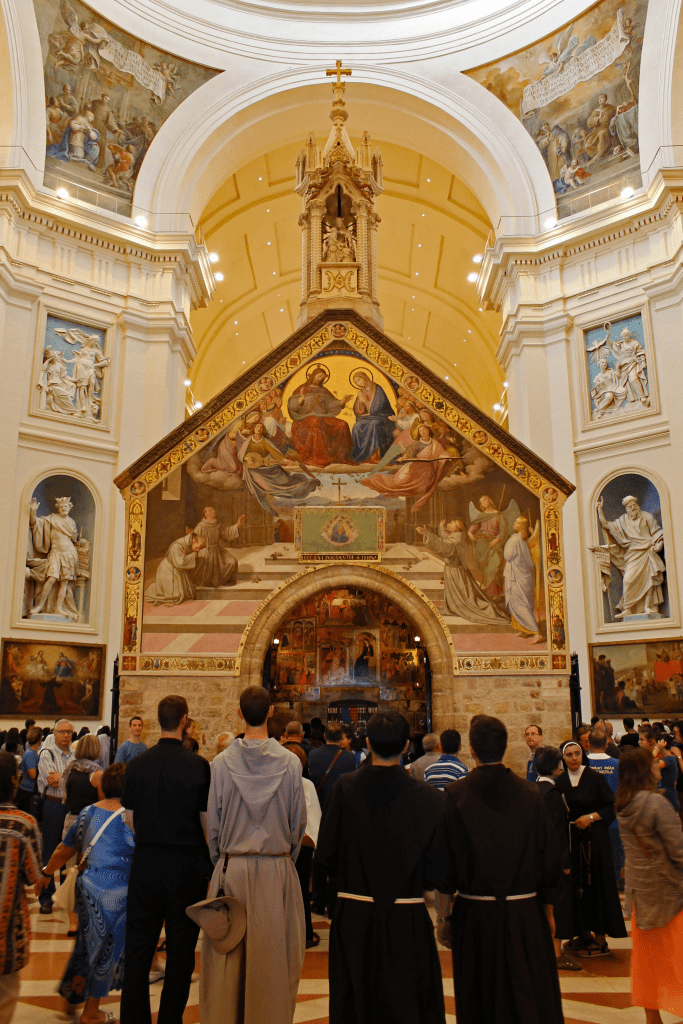
The Portiuncula is a small chapel located within the larger Basilica of Santa Maria degli Angeli. This chapel holds great importance for the Franciscan Order, as it is where St. Francis received his call to a life of poverty and service. The Portiuncula is a symbolic site for pilgrims, representing the essence of St. Francis’ message of simplicity and devotion.
Sept 9-10 Loreto

Nestled in the picturesque Marche region of Italy, the town of Loreto is renowned for its spiritual significance and the revered Holy House. The Holy House is believed to be the home of the Virgin Mary and is a site of deep veneration, attracting countless visitors who come to pray and reflect on their faith. As you approach Loreto, the sight of the majestic Basilica della Santa Casa comes into view, drawing pilgrims with its stunning architecture. Inside, the Holy House itself is enshrined, a sacred space that has been a focal point of devotion for centuries.
Campocavallo – Our Lady of Sorrows Image
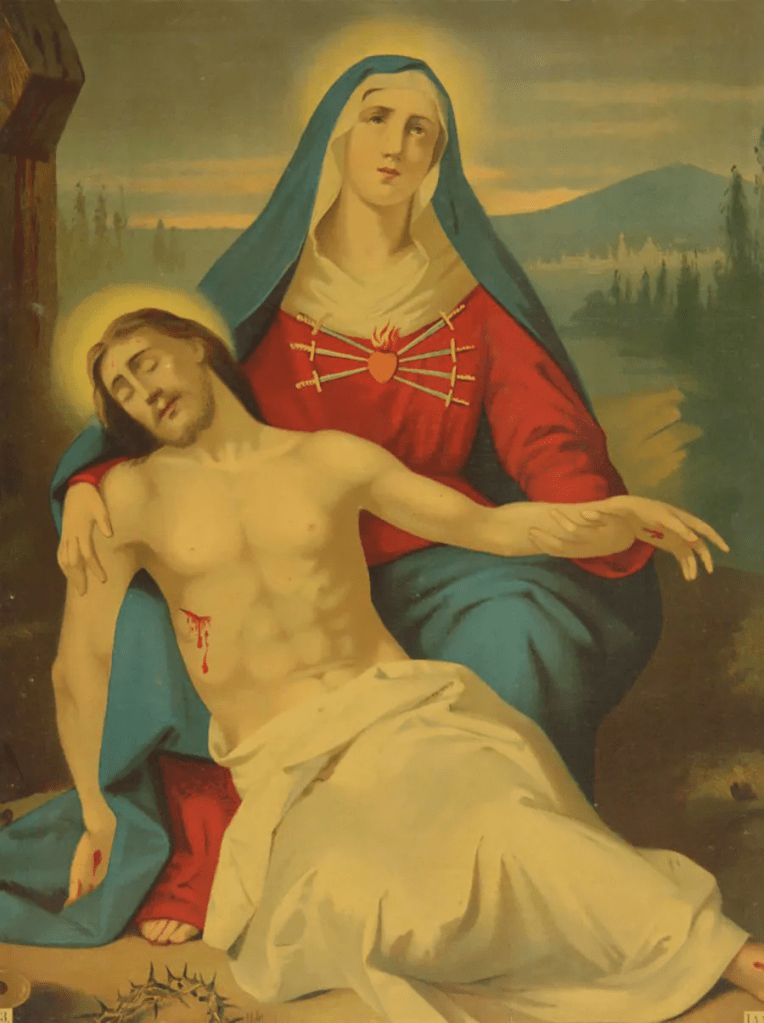
Your pilgrimage also includes a visit to Campocavallo, located nearby. Here, the image of Our Lady of Sorrows holds a special place in the hearts of the faithful. This profound depiction of Mary showcases her compassion and love. The painting is dedicated to Our Lady of Sorrows is a place for prayer and healing.
Sept 11 Manoppello’s Holy Veil

For the first-ever Holy Year, which Pope Boniface VIII (1294-1303) introduced as a Christian jubilee for the year 1300, the most important destination for many pilgrims to Rome was not an audience with the Pope or even the tombs of the apostles, but a gossamer-thin veil purporting to show the face of Christ.
This was the cloth called the Sanctum Sudarium in Latin (Holy Cloth) and is better known as “Veronica’s Veil.”
The veil, regarded at the time to be the greatest treasure of St. Peter’s Basilica, was considered to be a relic first mentioned in St. John’s account of the resurrection together with a large linen cloth, which many now believe is the Shroud of Turin.
In January 1208, a barefoot Pope Innocent III carried the Sudarium in its crystal reliquary from St. Peter’s Basilica to the nearby Hospital Santo Spirito in Sassia for the first time in Rome, thus making it known throughout the Catholic world. Since 1620, the same cloth has been venerated as the “Holy Face” (Volto Santo) in a Capuchin church on a hill outside Manoppello, two hours east of Rome, where on Sept. 1, 2006, Benedict XVI became the first pope to visit it in 400 years.
Sept 11 Eucharistic Miracle of Lanciano
Much study has been made into the dating of the miracle. It is believed to date back to the period 730 – 750 A.D. This was a time when the Basilian monks had a monastery in Lanciano. These Basilian monks were amongst the many Greek monks who had taken refuge in Italy to escape persecution in the East during the “iconoclastic struggle”.
The story goes that one day a monk was celebrating Holy Mass and was assailed by doubt about the real presence of Jesus in the Holy Eucharist. He pronounced the words of the consecration of the bread and wine, when suddenly, before his eyes he witnessed the transformation of the bread into Flesh, and the wine into Blood.
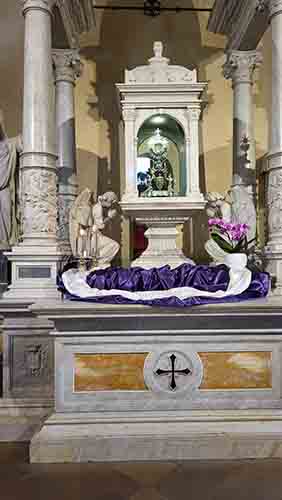
Relics
In 1920, the Relics of the Miracle were placed behind the new high altar of the church. Since 1923, the flesh has been exposed in the rays of a monstrance, whilst the dried blood clots are contained in a sort of crystal chalice at the foot of this monstrance.
In 1970, at the request of the Archbishop of Lanciano and the Minister Provincial of the Conventual Franciscans of Abruzzo, and with the authorisation of Rome, the relics were submitted to scientists for testing. The results of the scientific tests proved, inter alia, that:
- That the Eucharist is made from the striated muscle tissue of the myocardium (the muscle layer of the heart);
- The “miracle blood” is real blood.
Sept 11-12 San Giovanni Rotundo, St Michael Cave
The Church of Santa Maria delle Grazie
San Giovanni Rotondo
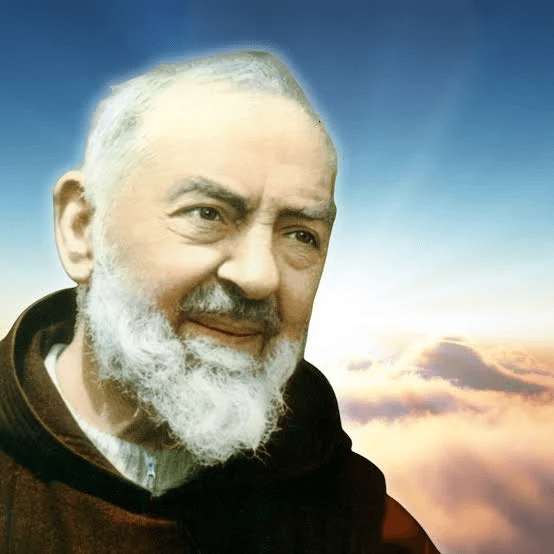
Located in the City of San Giovanni Rotondo, originally built in 1538, the Capuchin Monastery is the site where the Saint Pio lived from September, 1916, until his death in September, 1968.
Next to the Monastery rises the Old Church of Santa Maria delle Grazie (Our Lady of Grace), originally dedicated to Santa Maria degli Angeli, consecrated in 1629. In this small church with a capacity for about eighty people, Saint Pio celebrated Mass and heard confessions. It was here that Saint Pio received the sign of the visible stigmata in 1918.
The door to the old church has a ceramic semicircle over it depicting the Virgin Mary holding the baby Jesus. As Saint Pio gained notoriety for his stigmata, the church became too small to accommodate all the pilgrims who came to get a glimpse of him and to get his blessing. Construction of a new, much larger church was started adjacent to the old church in July, 1956, and was inaugurated in July, 1959.
The main altar of the new church originally had a mosaic created by Prof. Bedini and depicting only Our Lady of Grace, but after Saint Pio of Pietrelcina was canonized by Pope John Paul II on June 16, 2002, a figure of Saint Pio and an angel in the clouds was added to the design.
The basement of the new church served as the crypt for the body of Saint Pio from his death until April, 2010, when his remains were placed in a new metallic coffin and transferred to the crypt of the Saint Pio Pilgrimage Church.
The Hospital San Giovanni Rotondo
Known the world over as the “Hospital of Saint Pio”, the Casa Sollievo della Sofferenza (Home for Relief of the Suffering) is a religious hospital, entrusted to the Holy Father by Saint (Padre) Pio. The Casa Sollievo della Sofferenza Foundation, of which the hospital is part, “is under the control of the Holy See in the person of Cardinal Secretary of State “pro tempore” which on the same Foundation shall exercise the custody”. The intention of Saint Pio was to create a structure which alleviated the suffering of the sick, to give comfort and solidarity to a person crushed by pain and suffering, both physical and psychological.
The Cave Church of St. Michael Archangel
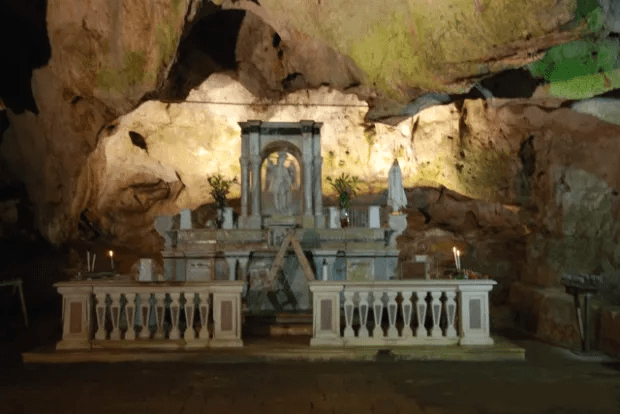
Built in limestone cave in Apulia, Southern Italy, this church has been attracting pilgrims from all over Europe for centuries. Of the many types of churches that the Christian community has built over the course of the centuries, cave churches really stand out. Often built by some of the earliest Christian communities, they reveal precious insights into how early believers would gather to worship and pray. Not too far from the shores of Lake Verano, in the southern Italian region of Apulia, This was built in the 5th century, the cave church of St. Michael Archangel was excavated out of one of the limestone caverns that dot the peninsula that makes up the Gargano National Park in Apulia. According to tradition, St. Michael descended from heaven and directed the founding of the cave church. The cave is 170 feet long and 22 feet tall, with a maximum width of 50-feet. Its walls are covered with the usual features of limestone caves, such as moss, stalagmites and stalactites, as well as signs of the cave’s centuries-old purpose: frescoes depicting religious images.
Sept 13-Bari -St Nicholas Overnight Ferry to Split, Croatia
St. Nicholas-Basilica di San Nicola

St. Nicholas of Bari was a 4th-century bishop from Myra (modern-day Turkey) who became known for his generosity, especially his secret gift-giving to the poor. Legends say he dropped bags of gold through a window to provide dowries for three impoverished sisters, a story that helped shape the Santa Claus mythos. After his death, his relics were moved to Bari, Italy, where he is still celebrated as a beloved saint and patron.
History
St. Nicholas’ tomb in Myra, Turkey was a popular place of pilgrimage. As Myra was a seaport, sailors heard the stories of the saint’s shrine and carried them to many distant places. If a town were fortunate enough to host such a significant religious site, besides blessing and prestige, it enjoyed considerable commercial benefit because pilgrims needed to be housed, fed, and otherwise provided for. After Myra fell under the control of the Seljuks, who were not sympathetic to Christian faith, Italian merchants in both Venice and Bari, saw an opportunity to bring such advantage to their cities. Their motives were opportunistic, but also spiritual, as there was real fear that pilgrimage could become difficult and dangerous or that the shrine might even be desecrated.
Early in 1087, three ships with sailors and merchants from Bari stopped in Myra on their way home from Antioch. When they visited Nicholas’ tomb, the monks showed them where the manna was extracted. The sailors then asked where the saint’s body lay. The monks, perhaps naively, showed them. But the monks became suspicious and questioned the visitors about their intentions, “Surely you do not intend to take the saint’s remains to your own region? If so, we won’t allow it.” However, in the end the Barians prevailed and broke open the tomb with an iron bar. The sailors spirited the bones away to the ship, escaping just ahead of the townspeople coming in hot pursuit.
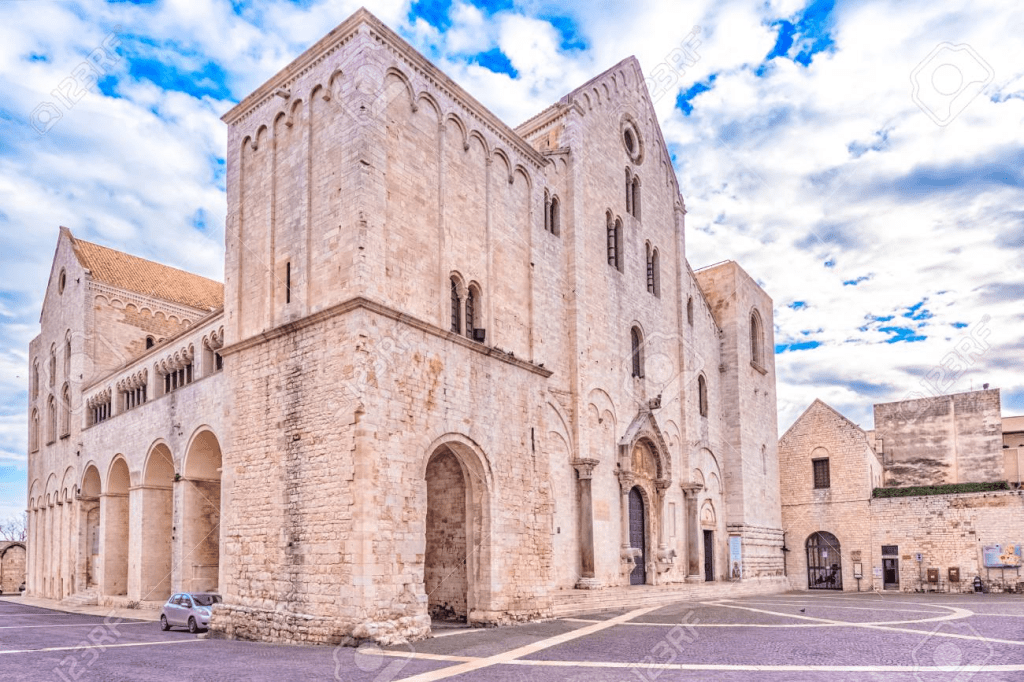
The men of Bari sailed away on the long voyage back to the southeast coast of Italy. Before getting there, they stopped at the nearby port of San Giorgio to make a beautiful box (casket) to hold the saint’s relics. When they arrived in Bari, May 9, 1087, the townspeople thronged to the harbor to welcome the saint’s remains. The returning men made a solemn vow to build a magnificent church to honor St. Nicholas. The crypt was completed by October 1089 and Pope Urban II laid the relics of St. Nicholas beneath the crypt’s altar, consecrating a shrine that became one of medieval Europe’s great pilgrimage centers. The main church was built in ten years, but it wasn’t until the middle of the 12th century that the imposing and majestic Basilica di San Nicola was complete. It is a particularly fine example of Romanesque architecture and served as a prototype for many other churches and cathedrals.
Overnight Ferry from Bari to Split, Croatia
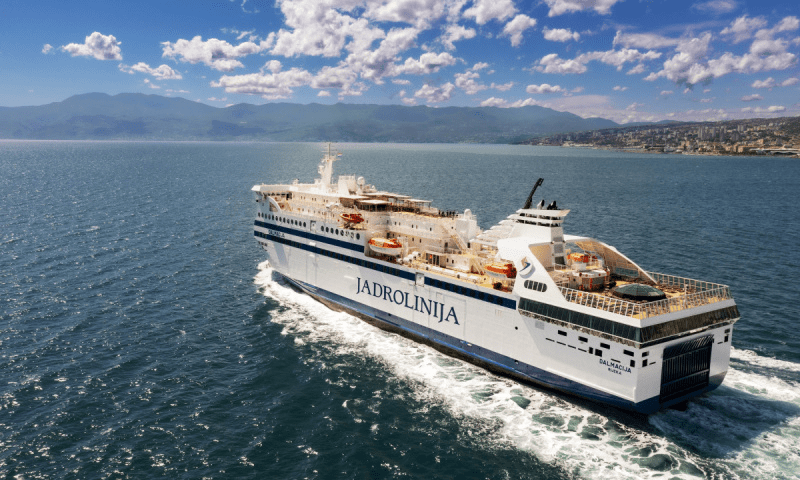
The ferry from Bari, Italy, to Split, Croatia, is a seasonal route, operating from May to October, with Jadrolinija being the primary operator. This is an over night ferry and we will have premium reclining seating for the over night sailing.
Sept 14-18 Medjugorje
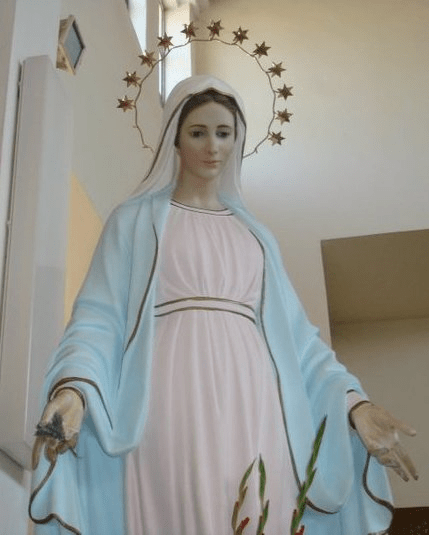
Medjugorje – A Mission for Peace
In June 1981, the Blessed Virgin Mary appeared to six children in a small mountain village in Bosnia-Hercegovina named Medjugorje. Identified as the Queen of Peace, she came on a mission of Peace with a message for the world. “I have come to tell the world that God exists. He is the fullness of life, and to enjoy this fullness and peace, you must return to God”.
Since then, Our Lady has been appearing and giving messages to the world through these six visionaries, Marija, Vicka, Ivan, Mirjana, Jakov, and Ivanka. She has told them that God has sent Her to our world and that these years She is spending with us, are a time of Grace granted by God. She has come to guide us to Her Son, Jesus, and invites us to convert our lives back to God and to urgently pray for Peace with all our hearts. “Peace, peace, peace, and only peace. Peace must reign between man and God, and between all people!” She leads us by walking with us and guiding us step by step, message by message.

5 Stones or Weapons
Our Lady wants to show us through Her messages the real face of Christianity and the path to peace. She says that we must realize that Satan is real and that he uses us for his own ends and purposes. His main purpose is destruction. Destruction of love, peace, faith, family, and life. Just as God gave David 5 stones with which to defeat Goliath, Our Lady is also giving us 5 Stones, or Weapons, that we can use to defeat satan.
 PAX Journeys